Friday, January 3, 2020

Blog #3 - Rumba's Evolution


Image result for rumba cubaThe rumba is the most prominent music genre in Cuba. It is a spontaneous, lively beat that inspires listeners to dance. The upbeat rhythm is the best way to identify rumba music; It is a spirited mix of percussion beats and vocals. These sounds originated from African music, which was brought to Cuba from Africa during the slave trade. The dances and music of rumba have changed over time as Cuban musicians began removing the African elements to appeal to tourist audiences. The rumba has changed and branched into other genres, such as salsa and mambo. All Cuban music stems from the rhythms and beats from rumba, and its core can be found in any style of music. Image result for rumba cuba
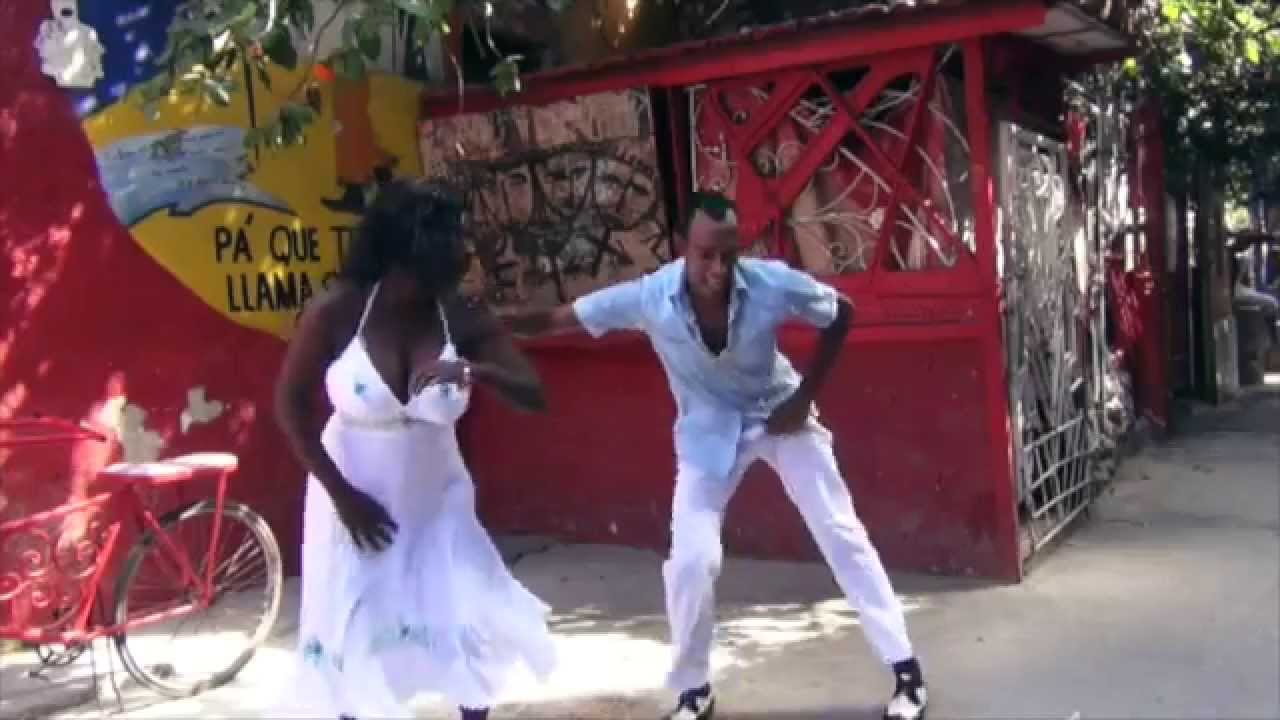

    There are three primary types of rumba dance: Colombia, Guanguancó, and Yambú. Colombia is a dance only for a man, and typically the man dances alone. This style is associated with more deprived areas and the countryside. Guanguancó is associated with Havana’s black neighborhoods. Though the music lacks African phrases and words, and the vocals are sung entirely in Spanish. The dance in the Guanguancó style includes a man and a woman, and the dance itself represents the man’s pursuit of the woman. Lastly, the Yambú is an older style than the Guanguancó and is much slower. The dance is meant for a man and a woman. It represents a woman flirting with a man, so the focus is mostly on her, rather than the man. The Yambú dancers pride themselves in the ability to dance in perfect harmony with the music.
       While rumba is played and enjoyed by people of all socioeconomic statuses’; from the Danzón, Son Cubano, Charanga, and much more. The rumba is still has a significant association with more impoverished people and their neighborhoods. This can be shown through the instruments the musicians use on the streets: spoons, wooden containers, sticks, and many other makeshift instruments. The musicians are incredibly resourceful and use anything that they can to bring the notes to life. The sound and rhythm of rumba are still evolving as it gains more support. The socialist government has sought to elevate rumba’s status, for the goal of valorizing the African contributions to Cuban identity and culture. Now, the rumba is present everywhere and poses as much of a political symbol as it does an art symbol.


Questions:
-In what other ways do you think the rumba is so vital to Cuban society?
- How would rumba have evolved differently if musicians had access to “real” instruments?
- How does the rumba’s connection to Cuba’s identity as a country help the government of Cuba or the tourism industry?

Blog Post #3- The Importance of Art and Dance in the Cuban Culture

Cuban art, music, and dance are fully immersed in the community in all aspects possible. All the way from the rumba, danzón, street art, or famous bands like Buena Vista Social Club. It seems as if all forms of art, music, and dance relate back to their heritage in some way, whether it being of Spanish or African descent. For example, salsa dancing was created in Cuba and is where both Spanish and Afro-Cuban elements were combined (“Cuban Music History”). I think it is truly amazing how both Spanish and African cultures were used as a template to form different types of art, music, and dance. Just think, if these two cultures didn’t merge the way they did, salsa dancing would have never existed! Now, as Americans, think of how many different cultures are influenced upon people of a different culture and how many different cultures of people are in America. Do you follow any cultures from a different country that is not your heritage? For instance, I am Norwegian but I like sushi, which is commonly made in Japan!

Music is highly cherished and valued in Cuba and is integrated in many different ways of their lives. After the revolution, the government prided themselves on creating a musical educational system where there are music schools all over the entire country. It is a high priority for teaching the children music when they are young since they are beginning to develop. Not only do the teachers teach them about music but they ensure the students are proficient with high level of skill and understanding. “The musicality of Cubans is undeniable. I’m not talking about genres. I’m not talking about formulas. Not even rhythm. Because Cuba and its music are much more than that” (“Music Education in Cuba: After the Revolution”, 0:11-0:22). I truly believe the Cubans give their whole hearts and soul for music and dance. It’s what they live for, especially since music and dance have been ingrained into them since they were very young. I wish music was more valued in America as much as it is in Cuba. When I was a kid, I remember taking music classes because we had too. But after elementary, we didn’t have to take music classes unless we wanted to be in choir or band. Looking back, I wish I took the opportunity to learn how to play an instrument and be more inclined musically. Think of yourself or your friends, how many chose to play an instrument or sing in school? Are you or your friend still continuing to play an instrument or sing as of right now? Do you believe that Cuba would have more people sticking with music all they into their early 20s than young adults in the United States? Do you think the United States should make music more of a priority in the educational system? If so, what are some benefits of doing so?

FAMOUS CUBAN ARTISTS
Carlos Estévez is one of the most profound artists in Cuba-- sculptor, painter, and photographer all in one! Carlos has painted for well over twenty years and some of his famous work resides in New York, Los Angeles, Miami, Paris, and Tokyo. Carlos was born in 1969 in Havana, Cuba and currently resides in Miami, Florida. He has also partook at art residencies all around the world in places like Mexico, England, Norway, France, New York City, and even in Boston!

Blog 3 - The Development of Cuban Architecture

I found the discussion on Cuban architecture to be very informative and thorough. I wasn’t surprised to see the heavy Spanish influence in the architecture as the colonial era was when Cuba’s culture was formed, but I was left thinking about native architecture and industry’s stability in a socialist nation.

I noticed that there were no visible signs of native architecture in the videos of the Cuban Architecture series. Even in America, native tribes have had some influence over the architecture of America in places like New Mexico. I wonder what the buildings looked like before colonialism, and if there are any records of the architecture that could be found. It would be a shame to lose this bit of history to imperialism.

I was also surprised at how religion and America have influenced the country’s architecture. Although many buildings were built before the revolution, there are still multiple religious symbols seen throughout the architecture. I was surprised to see that these were not taken down or removed. Additionally, according to the brief reading on architecture, the 1912 Spanish Railway Center and the Lopez Serrano Building are modeled after the U.S. Capitol Building and Rockefeller Center respectively. These were built in the 1930s, and they still stand today. With the tensions between Cuba and the United States, it seems strange that two important Cuban buildings that are influenced by America still stand. Of course, it would likely be way too expensive for the nation to rebuild, but I wonder if Cubans are bothered by it. I wonder if protests against the United States take place there, or if Cubans do not know what these buildings are copies of. I also found it ironic that the U.S. Capitol building houses Congress and is a representation of our freedom, which is not synonymous with what the Castro regime sees as “free”.

What does the architecture look like in other parts of Cuba? As Havana is the heart of Cuba and a tourist destination, I’m sure Havana’s architecture was given more attention throughout history. I remember from Cuba and the Cameraman that the brothers lived in a very simple home. Out in the country, there may be less Spanish influence. This is why I don’t understand how the architecture industry can last in a socialist nation. If some people get to live in nicely designed, although falling apart, distinct Cuban homes, and others need to live in simple shacks, I feel like this would be a division between the people as everyone is supposed to be equal. The country must figure out a way to distribute resources, yet not everyone has the same space. I also wonder how the crumbling architecture will be replaced. With small bits of capitalism entering Cuba, richer areas with more tourists will likely get upgrades first, further dividing the classes. I worry that Cuba will not be able to keep up with their failing infrastructure and architecture when many of their architects work outside of the country, have plans for expensive houses that don’t fit the socialist agenda, and when the country is too poor to place a large amount of money into construction, as seen in Cuba and the Cameraman.

How should Cuba deal with its crumbling architecture while preserving its charm? How do you think Cubans respond to international people building expensive homes and hotels among them? Do you think there will begin to be a divide as some Cubans are able to live in larger, newer homes even though the country is still socialist?

Blog # 3 Havana's Zodiac Sign

Havana is a Gemini figure to me, meaning that there is two faces to it: In its old, rundown, form or in its new, eclectic version that is rising up. I feel like these two sides can be seen in all the different types of art forms of Cuba, including music, dance, street art and even architecture.

In terms for music, I find that since there is so many different styles of music that have been previously established, there is infinite possibilities for new music to arise from those influences. The article on Cuban Music History that was provided outlines some of the older developments of Cuban music in a chronological order, starting with influential styles like Danzon and Son that lead into current styles like salsa and timba. The other sources provided to us showcases older artists whose music has been played for decades, like the music of Celia Cruz for example. The article also briefly mentions reggaeton, and cuts it short there. Reggaeton is one of the most popular forms of music in Latin America, along with musica urbana latina, and some of the artists that our generation is familiar with mainly perform this type of music, which can vary greatly from one artist to the next. Pitbull, El Chacal, and El Micha are some new-school Cuban artists that I am familiar with.

Dancing goes hand in hand with music in this sense, as most Cuban styles of music involve some sort of dancing. It will be interesting to see some of the dancing that will occur in the streets of Havana, and being able to identify the type of music that goes along with it. I really enjoy dancing - Brianda and I created a Caribbean dance team called the Caribbean Cats at UNH, and we will definitely be bringing back some new moves!!

As for street art, something that really jumped out at me was the two videos that showcased artist Micel Lopez (CC-tv broadcast) and French artist JR and Cuban American artist Jose Parla. Micel Lopez does beautiful portraits of kids around his neighborhood in Havana, completely unfunded. JR and Parla collaborated to create The Wrinkles of the City portraits in Havana, which showcase the elderly. These artists took similar art styles to demonstrate two completely different age groups - giving us a sense of community even though the faces demonstrated are so distinct. This type of art ties into the architecture of Havana, which is known today to be rundown and crumbling. Artists like these are giving a new life (or a face-lift, no pun intended) to these building, giving places like Havana even more character and eclectic essence than before. It is a shame that the government continues to censor some street artists, but its good to have some artists that aren't necessarily creating politically-motivated pieces.

With all this being said, what music style do you think is the most 'controversial' of Cuba? In terms of government interference?

Do you think that there is a level of 'taboo' to art in Cuba? Besides politically-driven stuff, are some forms of art more likely to be viewed in a negative way because of religion and Cuban tradition?

If you were to learn one style of dance from those we learned about, which would it be?

Blog #3: The Construction of Cuban Architecture, Music, and Art


An influential line for me during Unfinished Spaces was “Revolution is construction”. This quote made me realize how the architecture, music, and art in Cuba, were a form of development, just as the Revolution was, constantly changing as the time period and beliefs of the Cuban people changed. I noticed that the shifts of Cuban architecture mirrored those of the Revolution, clearly seen in the construction of the National Art Schools. When the Revolution began, Cuba had money to spend on elaborate architectural projects for the wealthy, such as the Havana Country Club. However, like the Revolution, Fidel felt that the architectural projects should be built for the people, stating, “Luxury projects are over. Gone are the great mansions and hotels. We’re now going to build for the people”. And so they did, until the ideas behind what architecture should look like and stand for changed, transforming it from something that represented creativity to something only used for practical purposes. However, I learn that the architecture within the country displays much more than what was seen in Unfinished Spaces. Cuban Architecture states how Cuba ranges in architectural diversity from colonial structures, neo-classical, baroque, art deco, art nouveau, and electric, all having been influenced by the preferences of the time. 
As Cuba has existed long before the Revolution, it made sense when I noticed early periods of Cuban music had little correlation to recent ideals. However, I noticed nearly all Cuban music had been formed by the people, ideas, and historical events of the time. Specifically, Cuban Music History discussed how many genres were influenced by people and cultures, such as Danzón, Charanga, and Folk music, which were inspired by Europeans, Haitians, and  African slaves and European/Chinese immigrants, respectively. Additionally, throughout time, the preferences for certain music has continually shifted. For example, in the ’20s and ’30s Son was the style of choice, but was altered in the ’40s to express more African roots, and in the ’70s to incorporate Latin musical forms such as the mambo and rumba. One line that caught my attention was “Modern Cuban music is known for its relentless mixing of genres”. This stood out to me because it followed what Yanet and the Profesora mention in Music Education in Cuba: Yanet the Cellist and Music Education in Cuba: After the Revolution, which was that although classical music is beautiful, they like to incorporate pop music, as they “complement each other”.  Overall, I felt as though Cuban music is a big mixing pot, full of different techniques and styles from cultures worldwide.

Finally, when focusing on Cuban street art, I noticed that it has developed from being a form of propaganda to something that has a deeper meaning. In Cuban street artists turns city walls into gallery Maisel Lopez paints his murals of children to improve the construction and development of society, in The Haunting Street Art Adorning Havana’s Oldest Buildings Yulier Rodriguez’s art is to “spark conversation”, and in Art in Wrinkles of the City JR and José Parlá create murals of senior citizens to share the different stories and “the wrinkles in humanity” that exist in Havana. Similarly, Consuelo Castaneda, a multidisciplinary artist in Miami, has used her art to help shift the popular understanding of the relationship between art and politics in Cuba and in wider Latin America.

Do you think if Cuba gained enough money it would reconstruct the deteriorating buildings? Or will they try and preserve them for the uniqueness and charm the world seems to love?

With more people traveling to Cuba, do you think future Cuban music genres will be influenced by them?

Blog #3: Opening Doors

The reading materials in the last module comprised of many political artists. Their backlash to the restrictions that Cuba had on expression has led to more openness regarding artistic ideas. Yanet the cellist, Rodriguez the street artist, and JR and José Parlá of Wrinkles of the City, all had similar reasons for creating their art. To understand Yanet, Cuban music education must first be understood. Music education in Cuba is widely encouraged. In Music Education in Cuba: After the Revolution, it is stated that, “music education is a priority” (00:37). In Cuba, children are taught instruments and music starting at the age of 6. What differs about Yanet’s story than other young Cuban musicians is that she does not comply completely with what is expected of her. First of all, she plays the cello which is not a popular instrument in Cuba. Secondly, rather than sticking with classical music, as her professors at university want her to do, she follows her passion. She finds pop and rock to be what drives her creativity in music. Instead of letting the “norm” of Cuba influence her, she listens to herself and doesn’t limit herself to one genre. Although Rodriguez’s art is completely different than Yanet’s, their drive to create is similar. At the start of Rodriguez’s career, he had stage fright for putting his art on such public display. This is due to the fact that Cuba is not used to street art, and is therefore skeptical of what it could bring. Instead of creating art that is more similar to that of Cuban history, Rodriguez attempts to “add color and aesthetic qualities back to the city as it crumbles” (The Haunting Street Art…). In addition to attempting to change the landscape of the city, Rodriguez also tries to find the most visible parts of the city to paint on so that he can receive the largest audience. Clearly he has gotten over his stage fright. Even though Cuban government was fearful of unregulated street art, Rodriguez doesn’t stop creating what he loves. The two artists JR and José Parlá are similar to Rodriguez in the way that they are creating street murals, but their motives and ideas are very different. The way that these two artists are attempting to change the status quo has to do with the subjects they choose. Rather than painting politicians such as Che and Fidel, as other street art portrays, their goal is to give the public a voice. For the biennial, they decide to plaster pictures of 25 random citizens of Cuba who have survived the Revolution. They feel as though it is time to tell the story of the people and not of the government. This idea is so different than anything before because, as JR and José Parlá state, “when they (the public) see our portraits, people think they are just old singers… but we explain to them that they are just old people that we met in the street” (Wrinkles of the City…, 05:37-05:43). Since these two artists are going against the status quo, they are questioning what has been done before them. JR, José Parlá, Yanet, and Rodriguez all go against what has been done before them in order to open new doors and options in the Cuban artistic scene.

Blog post #3 Changing the Walls of Havana


Many artist in Cuba are saving money on materials by using the walls of Havana as their canvas.  One artist named Yulir Rodriquez uses debris from decaying buildings and turns them into art. Yulir used the decaying building as his canvas because he feels it represents the decay in Cuban society which has forced people to seek alternative ways of making money. Yulir goal is to make art that questions the society. Most of the art involves violence with fear, sadness and misery which he says are alive in the Cuban life. Something that surprised me about Yulir art is that he puts back the same piece of debris on the street for free once he has painted it. Yalir was jailed for 36 hours and told he needed to erase all of his wall art. I feel he was in this situation because of the message he is trying to portray in his art goes against the Cuban governments image.
The tradition of street art has always been political but artist Mysel Lopez is turning his neighborhood into an art gallery. Mysel paints photo realistic pictures using grids by taking photos and turning them into murals. Mysel gets permission from parents and takes pictures of their children and recreates the picture on the outside of buildings. He has created 15 different murals all approved by the local authorities. In the video “Cuban street artist turn city walls into gallery” they talk about how the women’s wall he is painting brings him lunch every day and as people pass by, they stop and watch him create the painting. Mysel says he likes to paint children because they are important with the development of society and they are the future. He hopes to create more within the next year.
Lastly one of the videos provided was about graffiti in the city of Havana. One of the artist talks about how there is no list that say what you can and cannot paint. Although everything has to be with the revolution nothing against it. Although it is not illegal because there is not given permission, but it is also not legal due to it not being controlled. Now after what we have learned from last week’s module and this week’s I feel that the government only wants control over art if it will make a profit for an individual and not the government. Why are artist stopped by authorities for painting if it is not illegal? If there are no clear guidelines on what can and cannot be painted why would artist be arrested? Artist Mysel Lopez gets permission before his paintings but others don’t Do you think artist should have to pay the government for the piece of the buildings they use?

Thursday, January 2, 2020

Blog #3: The Faces of Cuba


In countless videos of Cuba, showcasing the crumbling, colorful streets of Havana, one can almost always see the same face adorning the walls: Che Guevara, a symbol of the Revolution. If not Che, then it’s propaganda posters of Fidel or Raul Castro. Recently, however, street artists have been adding the faces of regular, everyday citizens. In the video, “Wrinkles of the City”, one of the artists points out what the Cuban citizens wonder looking at their work: “One doesn’t see ordinary people on large walls in the city… it is not Fidel or Raul, nor Che Guevara. Who is this person?(“Wrinkles in the City”). Besides who is this person, what does this work mean? I think it’s a way of giving Cuba back to the people through visual representation. When people are only used to seeing Che Guevara and the Castro brothers, the most renowned people of Cuba and head figures of the Revolution, it is very powerful to see new faces. The “Wrinkles of the City” video was particularly focused on the elderly people of Havana. The two artists would find the elderly walking the streets of Havana, ask to take their picture and hear their story before plastering their picture to the crumbling wall. With these pictures, the artists would create strange calligraphy to represent their story- I can only wonder the exact meaning behind this. My thoughts are that the artists are attempting to recognize the hard lives of the elderly during the Revolution: they suffered and/or worked for Cuba as the well known figures did. Perhaps the calligraphy is unreadable because the average person will never hear or truly understand the individual’s story, but that’s just an idea of the symbolism. 
Another interesting point raised in “Wrinkles in the City” is when one of the artists says “the reaction [to the art] reveals the society; reveals how they think” (“Wrinkles in the City). When the artists are working on the streets of Havana there are lots of crowds and people asking about their project. They want to know why and what it means. Some feel threatened like one older man who said he would erase the artists’ work the next day while others assure they give them permission to continue to paint. These people who are more open to the project seem to be younger, making me wonder if these varied reactions are reflections on generational beliefs- particularly, perhaps, in regards to the Revolution ideals. One of the better reactions of the art is from Jose, one of the men who was painted, who is clearly pleased when people point out that he’s the man on the wall; showing the power of the art on those whose stories are being told to their city.
The artists who put together “Wrinkles in the City” are not the only ones putting up portraits of citizens who are not Fidel, Raul or Che. One artist paints murals of neighborhood children because he thinks it is a way to connect the public to his art, and children are the future of Cuba (Cuban Streets artists turn city walls into gallery). Though Yulier P.’s figures are more alien-like than anything they are still works of street art that aren’t propaganda, but rather self expression for the community (Graffiti Artist in Cuba launches New Project). 
What do you think putting the faces of average people on buildings means? What do you think street art reveals about Cuban society? 

Tuesday, December 31, 2019

Blog #2 - Hypocritical Government Views on the Arts

Art has always been a way for humans to express themselves and this is no different in Cuba. In a country where speech and expression is limited, artistic expression may be the only way to share ideas. Prior to the Revolution, the island’s artistic scene was just as diverse as the people. Influenced by South America, Europe, Africa, and other Caribbean nations, Cubans had a unique way of expressing themselves without using words. With the recent unrest and problems plaguing Cuba, artists have begun to use their art to question the state’s authority. Thus, the government has put forth Decree 349, which “essentially grants the Cuban Republic complete control over independent artistic production” (“As Criminalization of the Arts Intensifies in Cuba, Artists Organize”). 
One thing that struck me as odd was the hypocrisy of the government’s views on art between when comparing the two modules. For instance, Decree 349 states that pornography and sexism in art is prohibited, but the government had no issue allowing dancers to dress skantily and dance for tourists in order to support the country. Although, I suppose censoring art and dictating specific uses are both oppressive, but I would be interested to hear other views on this.
I think Cuba’s standpoint on the arts has always been dictated by what the state found useful at the time. After struggling for years economically, the state needed to exploit artists and allow them to make money and support the economy, which was why some artistic freedoms were allowed. However, with Cubans leaving the country and the art taking a more political turn, the state has decided it needs to shut down individual thought. For this reason, I found Tania Bruguera’s story to be fascinating. Her performances include readings promoting free speech, stimulating the individual thought the communist government greatly fears. With individuality, the government would have a tougher time exploiting the people and would need to listen to the desires of the people in order to keep loyalty. However, as Bruguera states, the government sells “the image [of] everyone in Cuba being happy” (“Tania Bruguera: Cuban Artist Fights for Free Expression”). It seems to be that the government loved its art when they could use it as proof that their people are happy in the socialist nation, but now that it is being used against the socialist state, the state is actively trying to shut it down.
As stated before, do you feel like it is like the country’s decision to condemn body art yet encourage dancing for tourists to be hypocritical? If more Cuban artists were to flee the country, or the sale of art is greatly restricted, how will the economy be affected? Will the loss of capital force the government to remove art restrictions, or will the fear of rebellion still be too great? 

Blog #2 - 100 Years of the Afro-Cuban Movement


Artists are historically known to use their work to push the boundaries and challenge the status quo. They can use art as a medium to affect policy, shed light on social issues and express their individual opinions. Cubans have struggled in so many various social issues and many have used art as a method to spur change in economic and social discrimination. Specifically, black Cubans have struggled since African slave labor was brought to the island. The beginning to ending racial injustices, economic and social discrimination within the black community was the Afro-Cuban Movement.
Initially, the Afro-Cuban movement was for artists to reconnect with their African heritage. It flourished in the late 1920s and early 1930s. The movement influenced Cuban literature, paintings, poetry, music, and sculptures. It was the first artistic movement in Cuba to be focused on one subject, black culture. The movement was very powerful since Cuba had abolished slavery only 40 years prior. During the years following the abolishment of slavery, black Cubans struggled to attain equal rights in the workplace and society in general. The Afro-Cuban movement parallels with the Harlem Renaissance. Nicolás Guillén, a Cuban poet and activist, was heavily influenced by the American civil rights movement. He recognized the inequalities during the American Civil Rights movement as the issues within his home country, Cuba. Guillén was a journalist and became a lifelong friend after interviewing Langston Hughes, who greatly influenced his later work. The heart of this movement was to recognize the African Heritage of Cubans. This movement was pivotal in the creation of Cuba’s cultural identity. Black music, art, and religion were not socially accepted and the movement was used to normalize and provide representation to a culture that is that of millions of Cubans shared.
Another movement impacted Cuban society similar to the Afro-Cuban movement, was the artistic avant-garde. Cubans before 1959 were familiar with American popular culture, such as films, magazines, and music. At the end of the first decade of the Revolution, influences brought from the US were discouraged and banned. The embargo had a significant effect on the art and culture of Cuba. The artistic avant-garde was the beginning of when Castro allowed Cubans to sell their artwork. The Project Antillano in the late 1970s, was a project that was a continuation of the effort for black Cubans to reprimand social inequalities within a Revolutionary society.
Now, the Cuban government supports and promotes culture in their education. Art is a pillar of the country’s international identity. The Afro-Cuban movement that began in the late 1920s, now almost 100 years later the movement is still prevalent, though the Cuban government has evolved and the stories and works of black Cubans are accepted; art is part of life in Cuba, and art is how Black Cubans were heard.

1. Do you think art can actually create social change in a communist society?
2. Did the Afro-Cuban movement actually impact culture or were there many other factors that had a greater influence?
3. Do you think we will see the impacts of the Afro-Cuban movement in everyday life, such as the markets or tourist industry?